Time-honored turkey, done right.
Pasture-raised turkeys run leaner than the supermarket birds most recipes were written for, so they finish sooner. Here’s how our team cooks them, with a planner that works backward from dinner.
- Pull the breast at 155°F and let the rest finish it
- Start checking the temperature at 10 minutes per pound
- Dry brine two days ahead for seasoned meat and crisp skin
- Bake the stuffing in a dish, outside the bird
- Rest it 30 minutes under foil before carving
Four numbers worth keeping by the stove
A turkey that lived outdoors carries less fat under the skin, and that fat is what forgives an extra twenty minutes in the oven. We’ve seen our birds finish as much as an hour ahead of a conventional turkey the same size.
Where we part ways with the USDA
The USDA says cook turkey to 165°F. We tell members to take the breast out at 155°F, so you should know why. 165°F is the point where poultry is safe the instant it gets there. Time does the same work at a slightly lower temperature, and a resting turkey keeps climbing for a while after it leaves the oven. That carryover is what our number counts on.
If you’d rather not count on it, check the breast again after the rest. Under 165°F, it goes back in for ten minutes. You give up a little juiciness and keep your peace of mind. The call is yours.
Trust the thermometer over the clock
Push an instant-read thermometer into the thickest part of each spot, away from the bone. Expect about ten more degrees while it rests under foil.
| Take it out at | After a 30-minute rest | |
|---|---|---|
| Breast | 155°F | About 165°F. Check it before you carve. |
| Thigh | 170–175°F | Dark meat wants more heat to turn tender. If the breast gets there first, tent it with foil and give the legs ten more minutes. |
| Stuffing in the bird | 165°F | Rarely there by the time the breast hits 155°F. Bake it in a dish instead. |
The method cooks have leaned on for generations
Skipping the salt and skipping the rest are the two that cost you.
Salt it two days ahead
For a 14 lb bird: 3 Tbsp kosher salt, 1 Tbsp light brown sugar, 1½ tsp dried thyme, sage or rosemary, ¾ tsp black pepper. Rub it over and under the skin, then leave the bird uncovered in the fridge. Want it done for you? Add our pre-mixed brine.
Take the chill off
Set the bird on the counter for about an hour while the oven heats. More than two hours out of the fridge is a food-safety problem, and the center won’t reach room temperature anyway.
Stuffing goes on the side
A stuffed bird has to cook until the stuffing hits 165°F, and by then the breast is long past where you want it. A baking dish gives you crisp edges and a juicier turkey.
Start hot, finish low
Roast at 450°F for about 30 minutes to set the skin, then drop to 300–350°F. With time to spare, go as low as 250°F after the hot start. It takes hours and pays you back in texture.
Baste if you like
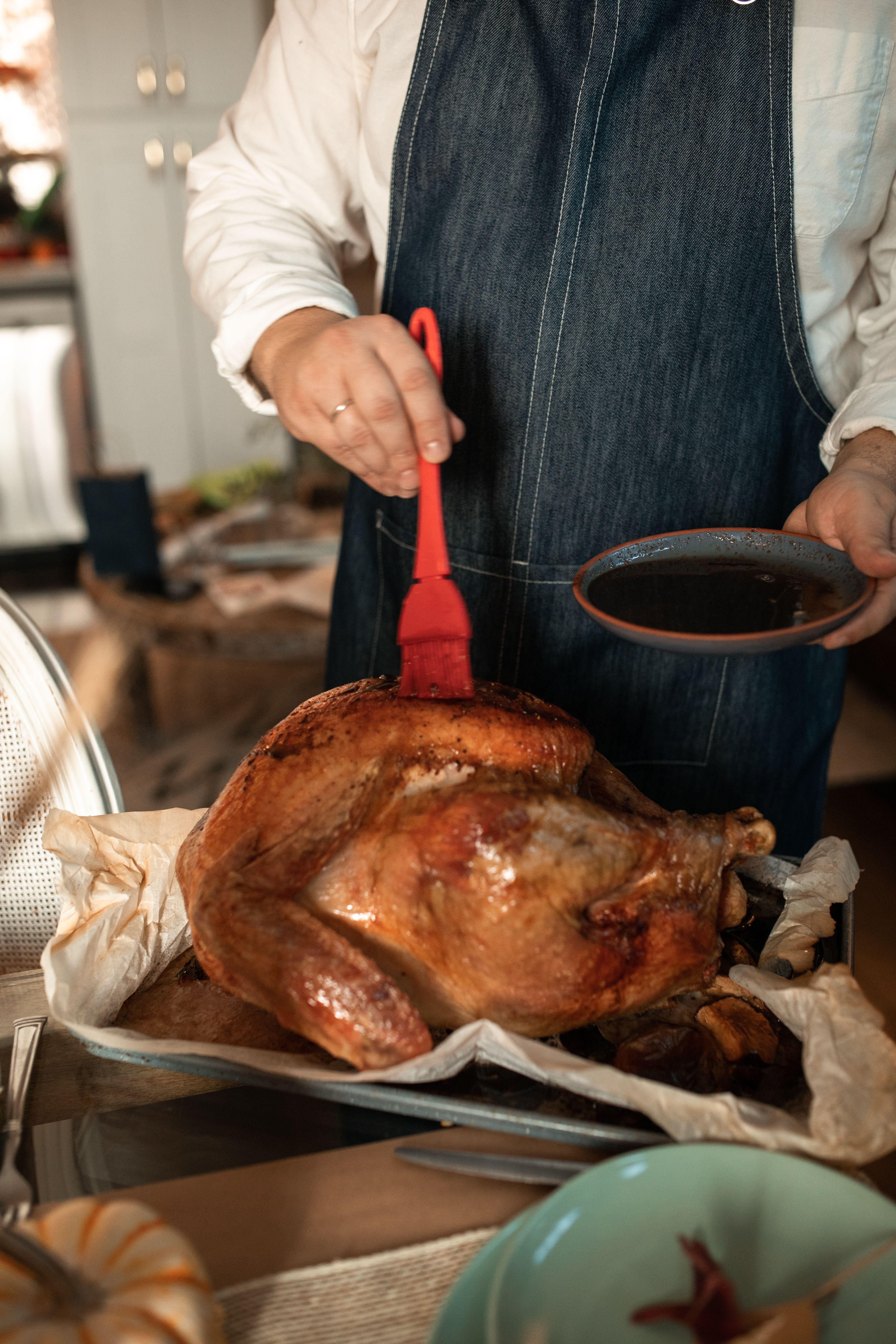
The dry brine does the heavy lifting, so basting is optional. If you want to, melt Walden lard with a few herbs and brush it on once or twice.
Rest it 30 minutes
Tent with foil and walk away. The juices settle back into the meat instead of onto the board, and carryover heat finishes the cooking. Use the time for gravy.
Plan it backward from the table
Enter your bird’s weight and when you want to eat. You’ll get the day to start thawing, when to salt it, and when the oven door opens.
Patience starts in the fridge
The fridge is slow and hands-off. Cold water is faster and needs you nearby to change the water every 30 minutes. Never thaw on the counter.
| Bird weight | In the fridge | In cold water |
|---|---|---|
| 10 lb | 2 days | 5 hours |
| 12 lb | 3 days | 6 hours |
| 14 lb | 3 days | 7 hours |
| 16 lb | 4 days | 8 hours |
| 18 lb | 4 days | 9 hours |
| 20 lb | 4 days | 10 hours |
What most folks ask
What size turkey do I need for my number of guests?
Plan on about 1 to 1½ pounds per person. The lower end feeds everyone; the upper end leaves leftovers. For 8 guests, that’s a 10 to 12 lb bird, or 14 lb if you want a second day out of it.
How long does a pasture-raised turkey take to cook?
Start checking at about 10 minutes per pound and budget around 13 minutes per pound so dinner isn’t waiting on the bird. A lean pasture-raised turkey often finishes ahead of the times on conventional packaging. Pull the breast at 155°F and rest it.
What is dry brining, and why use it on a turkey?
Dry brining means salting the bird a day or more before you cook it. The salt draws out moisture, dissolves into it and gets pulled back into the meat, seasoning it through and helping it hold onto juice in the oven. The skin dries out in the fridge, which is what gets it crisp.
Should I wet brine or dry brine a pasture-raised turkey?
We dry brine. A wet brine needs a bucket and a lot of fridge space, and it plumps the meat with water that dilutes the flavor you paid for. Dry brining gives you seasoned meat and crisper skin with a fraction of the mess.
Can I stuff a pasture-raised turkey?
You can, but we don’t recommend it. Stuffing in the cavity has to reach 165°F to be safe, and a lean bird’s breast dries out well before it does. Bake the stuffing in a dish and put a halved onion, lemon and some herbs in the cavity for aroma. Never stuff the bird the night before.
How do I make gravy from turkey drippings?
While the bird rests, pour the drippings into a measuring cup and let the fat rise. For each cup of gravy, cook 2 Tbsp of that fat with 2 Tbsp flour for a couple of minutes, then whisk in 1 cup of defatted drippings topped up with stock. Simmer until it coats a spoon. If your bird came with the neck, simmer it in water while the turkey roasts and you’ve got your stock.
Can I thaw a turkey on the counter?
No. The outside of the bird sits in the temperature range where bacteria grow fastest long before the center thaws. Use the fridge, or cold water changed every 30 minutes if you’re short on time.
One bird. One thermometer. No guesswork.
Build your Thanksgiving delivery around a pasture-raised turkey from our farms, and add the pre-mixed dry brine while you’re at it.
Build your Thanksgiving delivery →First turkey or thirtieth, our Member Experience team will talk you through it: 978-362-8642 or members@waldenlocalmeat.com